
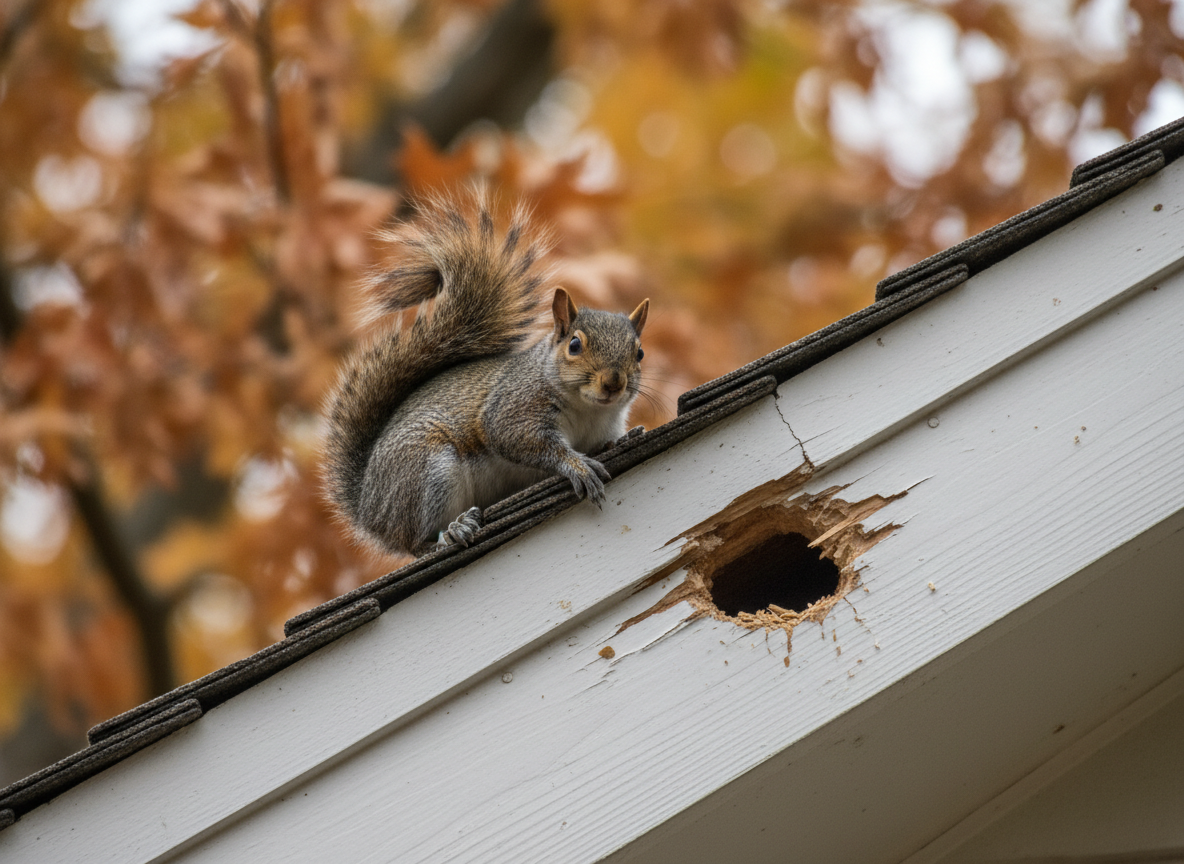
From September to November, squirrels across Durham Region start hunting for a warm place to spend the winter. An attic with a small gap at the roofline is perfect for them, and once they’re in, they chew, nest, and make a lot of noise. Here’s how to stay ahead of them.
Early warning signs
- Scratching or running in the attic in the early morning and late afternoon
- Chewed holes or gaps along soffits, fascia boards, or roof vents
- Squirrels running along your roof or jumping from nearby branches
- Leaves, twigs, or shredded insulation near vents or in the eavestrough
Weak spots to check before winter
- Roof vents: plastic vents are easy for squirrels to chew through
- Soffit corners: where the soffit meets the roofline is a common entry point
- Plumbing stacks and chimneys: gaps around them are easy to miss
- Overhanging branches: trim them back so squirrels can’t jump straight onto the roof
Why patching a hole isn’t enough
If a squirrel is already inside, blocking the hole can trap it in your attic, where it will chew a new way out or cause bigger problems. Squirrels are also persistent chewers, so a quick patch with foam or wood rarely holds. Squirrels chewing on attic wiring is a real risk, which is another reason not to wait.
How proper squirrel exclusion works
- Inspect the whole roofline to find every entry point, not just the obvious one
- Install a one-way door so squirrels can leave but not return
- Repair and reinforce the damaged areas once the attic is empty
Learn more about our squirrel removal service in Durham Region, or book an inspection. First-time customers save 10%.

